
Plant- and animal-source amino acid powders used as co-formulants with humic and fulvic carbon in foliar and fertigation products.
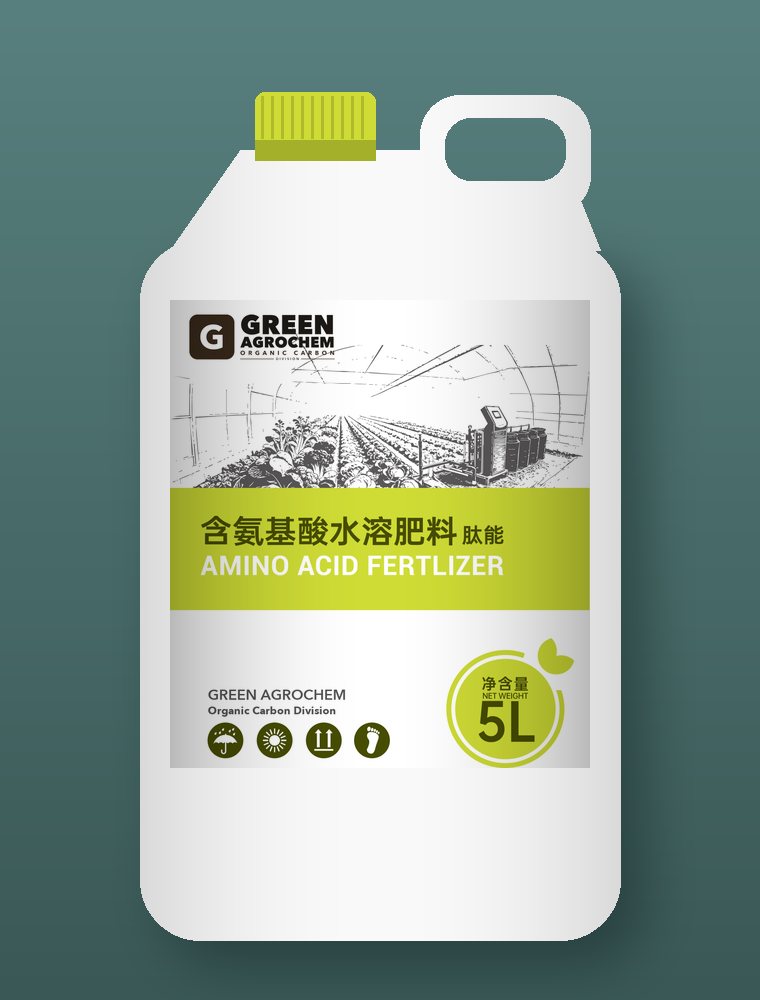
Amino Acid Water-Soluble Fertilizer
Amino acids ≥ 100 g/L with Ca and Mg, 5 L.
NY 1429Plant amino acid 50%
Fully water-soluble powder.
50%Plant amino acid 70%
Fully water-soluble powder.
70%Plant amino acid 80%
Fully water-soluble powder.
80%Animal amino acid 30%
Fully water-soluble powder.
30%Compare amino acid grades
| Grade | Source and process | Amino acids | Nitrogen | pH |
|---|---|---|---|---|
| Plant amino acid 50% | Soybean, enzymatic hydrolysis | ≥ 50% | Amino N ≥ 12% | 5–7 |
| Plant amino acid 70% | Soybean, enzymatic hydrolysis | ≥ 70% | Amino N ≥ 12% | 5–7 |
| Plant amino acid 80% | Soybean, enzymatic hydrolysis | ≥ 80% | Amino N ≥ 12% | 5–7 |
| Animal amino acid 30% | Poultry feathers, acid hydrolysis | ≥ 30% | Total N ≥ 15% | 4–6 |
| Amino acid water-soluble fertilizer | Finished liquid, 5 L | ≥ 100 g/L | Ca ≥ 25 g/L, Mg ≥ 5 g/L | 3–9 (1:250) |
All powders are fully water-soluble. Values are supply specifications; confirm them against the COA of the lot you test.
How to choose
- Plant or animal source: plant grades are made from soybean by enzymatic hydrolysis and are chloride-free; animal grades are made from feathers by acid hydrolysis and cost less per unit of nitrogen.
- Concentration: higher grades (70–80%) let you formulate concentrated liquids with less powder; 30–50% grades suit blends where amino acids are a secondary ingredient.
- Raw material or finished product: the powders are raw materials for your own foliar or fertigation products; the 5 L amino acid water-soluble fertilizer (NY 1429) is ready to use.
- Combination with carbon: amino acids are often formulated with humic and fulvic acids or seaweed extract in one liquid.
FAQ
What are amino acid fertilizers used for?
As foliar sprays and fertigation inputs that supply free amino acids and organic nitrogen, and as raw materials for liquid fertilizers, often combined with humic, fulvic or seaweed ingredients.
What is the difference between plant and animal amino acids?
Plant grades come from soybean by enzymatic hydrolysis and are chloride-free. Animal grades come from poultry feathers by acid hydrolysis and are lower in cost per unit of nitrogen.
Which grade should I buy?
Choose by the amino acid level you need in the final product, by source (plant or animal) and by cost per unit of amino acid. We can send samples of two grades for side-by-side trials.
How are amino acid powders packed?
In 25 kg woven or kraft bags with an inner liner; jumbo bags and private-label packing on request. Keep bags closed, as the powder absorbs moisture.